Cart
Your cart is empty
Find
Reconstitution diluent · benzyl-alcohol preserved
Also known as Bacteriostatic water · preserved diluent
Sterile water with a benzyl alcohol preservative, used to reconstitute lyophilized research compounds. For research use only.
Launch Sale · Ends Nov 6
Tested lot by lot at ≥99% purity. The Janoshik certificate for your lot is emailed with the order.
Everything Valtrax Research ships is bench material for in-vitro work. None of it is a drug, a supplement, a cosmetic, or a medical device, and none of it is intended for human or animal use, ingestion, or administration. Placing an order is your confirmation that you are a qualified researcher buying for lawful research, under every Canadian law and regulation that applies to you.
Water with a benzyl alcohol preservative — the only item in this catalog that is not a research compound. Its purpose is dissolution: lyophilized material has to go into solution before anything can be measured, and the preservative is what allows a multi-draw vial to be entered more than once without the contents turning into a culture.
Benzyl alcohol is the reason the vial behaves the way it does, and it is also the reason compatibility matters. The preserved diluent literature is largely a record of which preparations tolerate it and which do not.
There is no pharmacology to summarize here — the literature treats bacteriostatic diluent as a variable rather than a subject. What gets studied is compatibility with the compound being dissolved, stability and preservative effectiveness over the life of an opened vial, and how preserved solutions compare with unpreserved ones in practice.
The working properties are the point. Benzyl alcohol suppresses bacterial growth in the vial, so the container tolerates repeated withdrawal in a way unpreserved water does not, and that is what makes it the default for reconstituting lyophilized stock.
The trade-off is chemical compatibility. Preserved diluents are not inert toward everything they touch, and the published record includes both documented incompatibilities and preparations whose stability and preservative effectiveness hold up after dilution. Which case applies is a property of the compound being dissolved, not of the water.
Benzyl-alcohol-preserved water and saline entered routine use as multi-dose diluents, and most of the literature that followed is practical rather than mechanistic: compatibility reports, stability and preservative-effectiveness work after dilution, and comparisons of preserved saline against other agents in clinical settings.
The useful lesson from that record is the negative one. An incompatibility documented in 1988 between an alkylating agent and benzyl-alcohol-preserved water remains the standard illustration that the diluent is a variable in the experiment, not a neutral background.
In vitro and animal studies
Bacteriostatic water is not a research compound and this section describes a preservative rather than a pharmacology. It is sterile water for injection containing 0.9% benzyl alcohol, an aromatic alcohol used as an antimicrobial preservative for well over a century.
Benzyl alcohol's mechanism is non-specific: it disrupts microbial membrane integrity and interferes with membrane transport, which is why resistance to it is not a practical concern in the way antibiotic resistance is. At 0.9% it is bacteriostatic rather than bactericidal — it suppresses proliferation of organisms introduced during repeated vial entry rather than sterilising contaminated contents. That distinction matters: a vial that is already contaminated does not become safe.
The preservative is also mildly analgesic at the injection site, an incidental property with its own small literature.
Compatibility is the pharmacologically relevant question here. Benzyl alcohol is not inert toward every peptide, and a minority of published protocols specify plain sterile water or a buffered diluent for that reason.
Human data, where it exists
Bacteriostatic water is an approved pharmaceutical product with established labelling, which places it in a completely different category from the research compounds it is used to reconstitute. Its clinical characteristics are documented rather than inferred.
The most important documented finding is a toxicity one. Benzyl alcohol was implicated in neonatal gasping syndrome, a fatal toxic syndrome observed in premature infants exposed to benzyl alcohol-preserved flush solutions, characterised by metabolic acidosis, respiratory distress, neurological deterioration and death. That history is the reason benzyl alcohol-preserved products carry explicit contraindications in neonates and are labelled accordingly.
In adults at the quantities involved in reconstituting a small-volume vial, benzyl alcohol exposure is far below the levels associated with that syndrome. Hypersensitivity reactions to benzyl alcohol are documented but uncommon.
Common assertions, and what the record supports
The claim that bacteriostatic water allows multiple withdrawals over several weeks is accurate and is the reason it is the standard diluent for lyophilized peptides.
The claim that it makes reconstituted material sterile is wrong and worth correcting directly. It suppresses growth of organisms introduced in small numbers during normal entry. It does not sterilise, it does not compensate for poor aseptic technique, and it does not rescue a vial contaminated at reconstitution.
The claim that it is universally interchangeable with sterile water is also wrong, in both directions. Sterile water lacks preservative and should be treated as single-use once entered. Bacteriostatic water contains an active chemical that is not compatible with every preparation, and some protocols specify against it deliberately.
The assumption that preservative-containing diluent extends shelf life indefinitely does not hold either: the peptide's own chemical stability, not microbial growth, is usually the limiting factor.
Against the compounds it is most often confused with
Against plain sterile water for injection, the difference is the 0.9% benzyl alcohol and everything that follows from it: repeated entry over weeks versus single use, and an added chemical that must be compatible with the preparation versus none.
Against buffered diluents such as phosphate-buffered saline, the difference is pH control. Bacteriostatic water is essentially unbuffered, so the pH of the resulting solution is determined by the peptide and any counterions present. Peptides with narrow pH stability windows are sometimes specified with a buffered diluent for that reason.
Against bacteriostatic sodium chloride, the difference is tonicity — the saline version is isotonic where bacteriostatic water is not, which matters for some preparations and routes.
Unlike every other item in this catalogue, this one is a tool rather than a subject of study.
Adverse findings, toxicology gaps, material hazards
The contraindication in neonates is absolute and historically grounded. Benzyl alcohol-preserved solutions must not be used in newborns, and the gasping syndrome literature is the reason.
Hypersensitivity to benzyl alcohol occurs and can present as local reaction or, rarely, systemic reaction. It is a recognised contact allergen.
The practical hazard in ordinary use is dilution of attention rather than toxicity. Because the preservative reduces the consequences of minor contamination, it invites less careful technique — and it does not protect against organisms introduced in quantity, against a compromised stopper, or against a vial left at room temperature.
Chemical incompatibility is the other real risk. Benzyl alcohol can affect certain peptides and proteins, and using it where a protocol specifies plain or buffered diluent introduces a variable that will not be visible in the vial.
Large-volume use is where benzyl alcohol exposure becomes quantitatively meaningful; small-volume reconstitution is not.
Bench practice for this compound
Direct the diluent stream against the inside wall of the receiving vial rather than onto the powder cake. Peptides are surface-active, and a stream landing directly on the powder generates foam — visible foam means denatured material at the air-water interface.
Allow the cake to dissolve without agitation, swirling gently if it needs help, and never shake. Material that remains undissolved after a few minutes usually resolves with gentle warming to room temperature in the hand.
Store the diluent itself at room temperature unless labelled otherwise. Once a peptide is reconstituted, the resulting solution belongs at 2–8 °C, protected from light, with the working window given on that compound's page. Swab the stopper before each entry; the preservative is a margin of safety, not a substitute for technique.
This summary describes published research. It is not a protocol, not a recommendation, and not a statement that this compound is safe or effective for any use. Not for human or animal use.
Behme, RJ. et al. (1988). Incompatibility of ifosfamide with benzyl-alcohol-preserved bacteriostatic water for injection.
PubMedCorbo, DC. et al. (1992). Stability, potency, and preservative effectiveness of epoetin alfa after addition of a bacteriostatic diluent.
PubMedMcNelis, KA. (1998). Intradermal bacteriostatic 0.9% sodium chloride containing the preservative benzyl alcohol compared with intradermal lidocaine hydrochloride 1% for attenuation of intravenous cannulation pain.
PubMedHunt, SV. et al. (2022). Bacteriostatic preserved saline for pain-free periocular injections: review.
PubMedThis is a diluent, not a research compound. The independent Janoshik certificates included with an order cover the compounds in it; they do not describe the water.
Janoshik Analytical, a laboratory Valtrax does not own, runs the testing — identity by mass spectrometry, purity by RP-HPLC at ≥99%, on the lot you receive.
Same Shelf
Tissue Repair & Cytoprotection
$56.00
$70.00
10mg
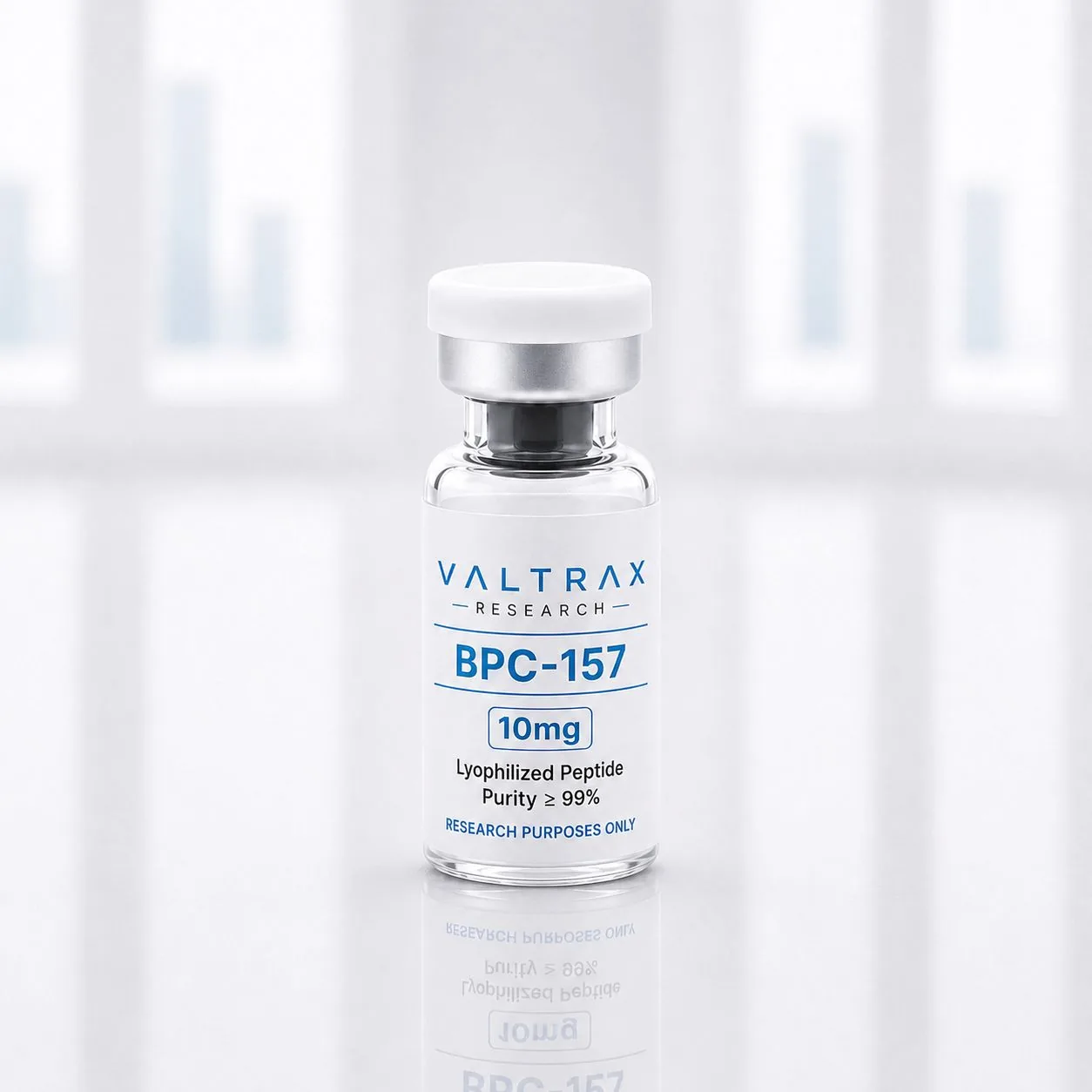
Body Protection Compound-157. A 15-amino-acid peptide studied in experimental models of structural repair and angiogenic pathway regulation.
Tissue Repair & Cytoprotection
$48.00
$60.00
10mg
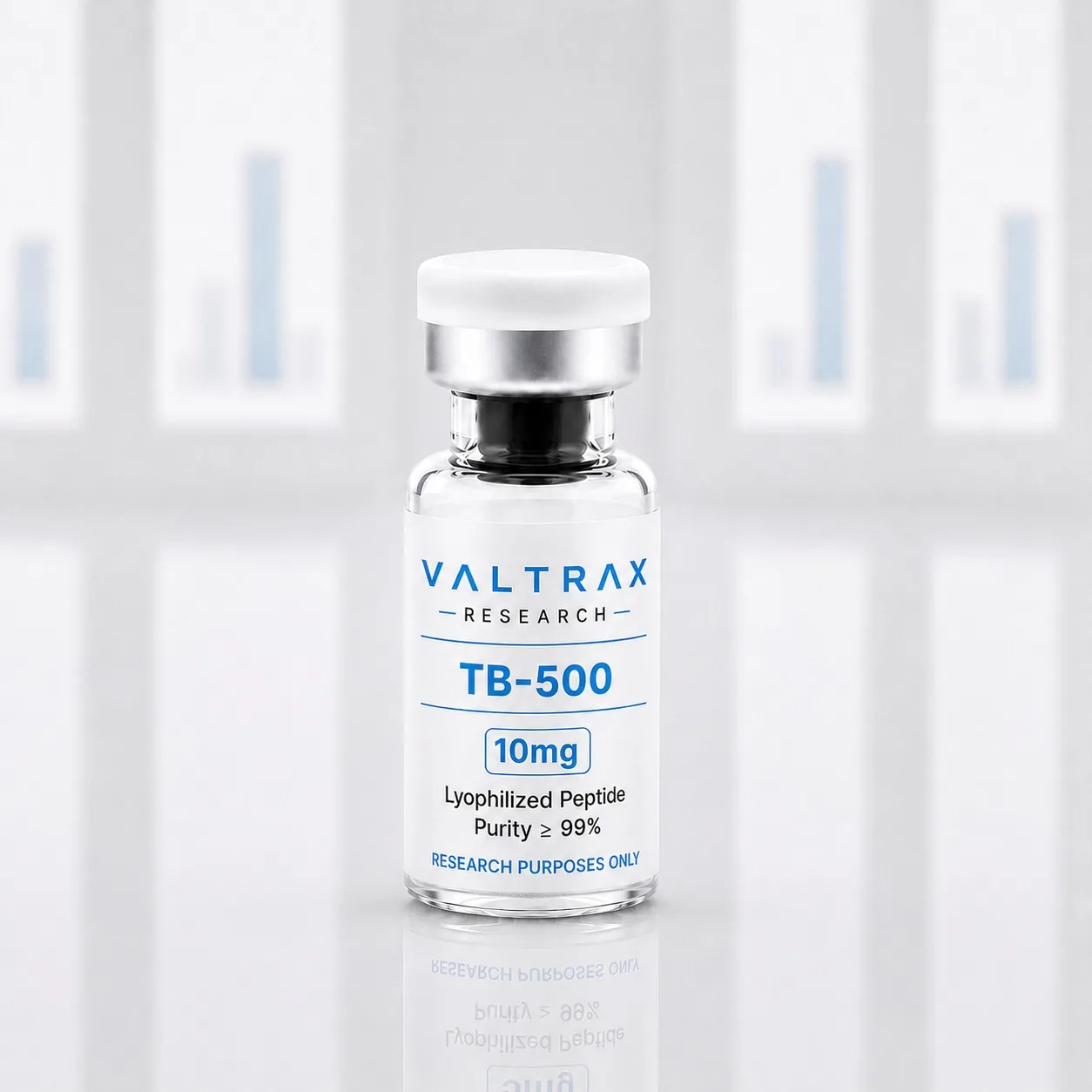
Thymosin Beta-4 fragment. A 43-amino acid synthetic peptide. Supplied as a lyophilized powder for research purposes only.