

Valtrax Research is opening — leave your email and we'll ping you the moment the first compounds are listed.

Every lot tested by Janoshik Analytical

08 / Shelf

Blends & Stacks Peptides

Blends combine two or more sequences in a single lyophilized vial. The published rationale for combining peptides is almost always mechanistic complementarity — pairing compounds that act through unrelated pathways toward the same endpoint. The trade-off is real and worth stating plainly: a blend cannot tell you which component produced an effect. They suit protocols where the combination itself is the variable under study, and they are a poor choice where isolating a single compound matters.

Why the literature combines these sequences

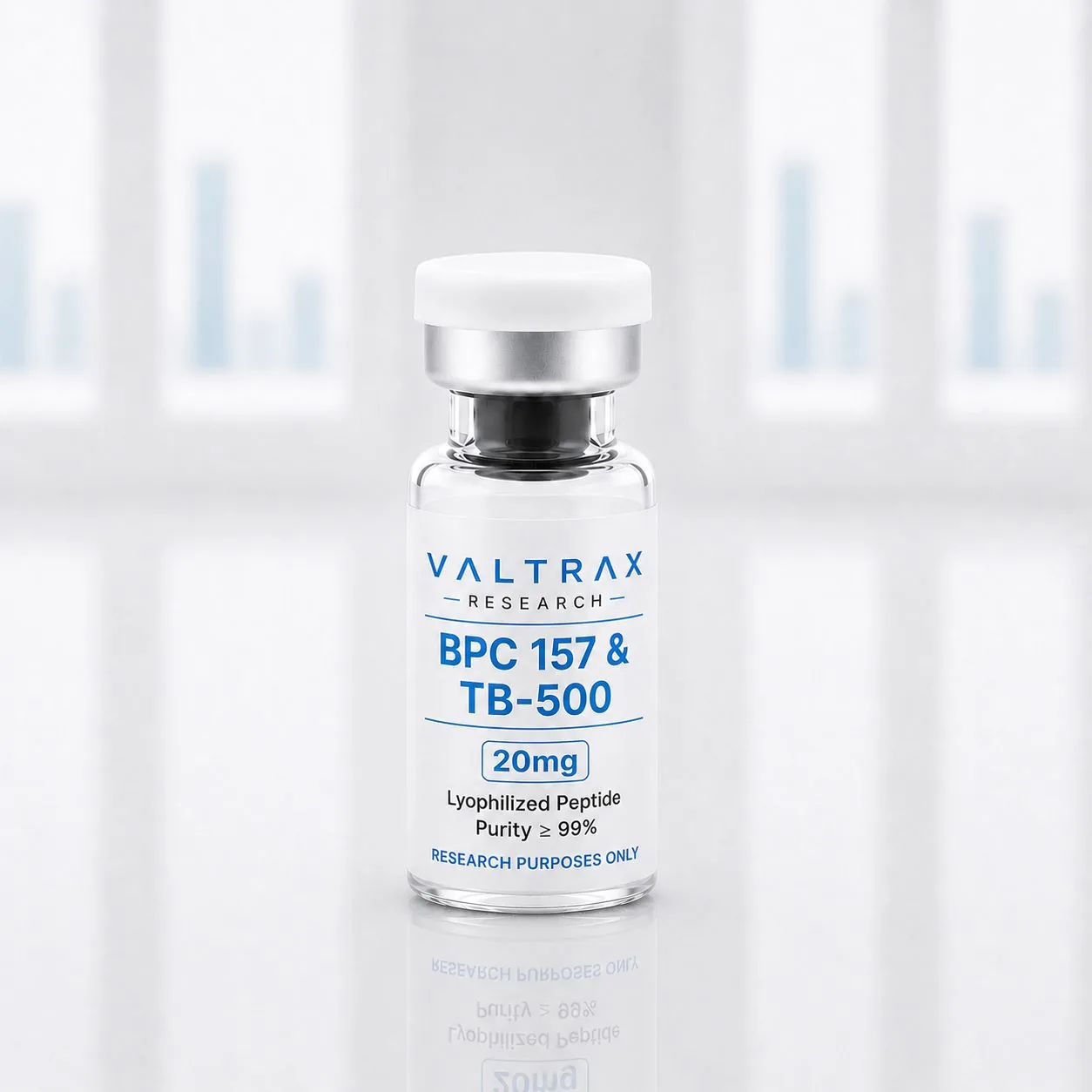
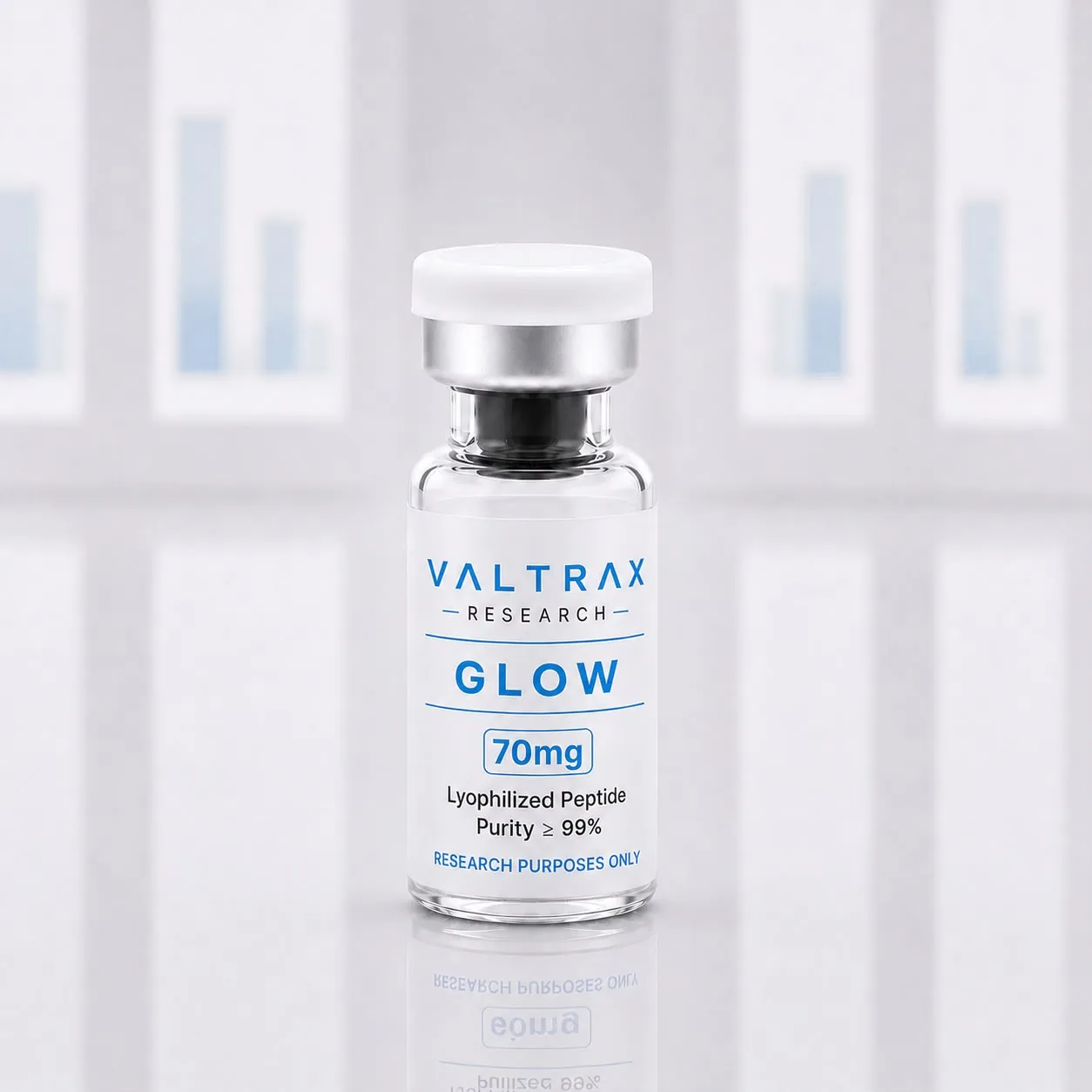
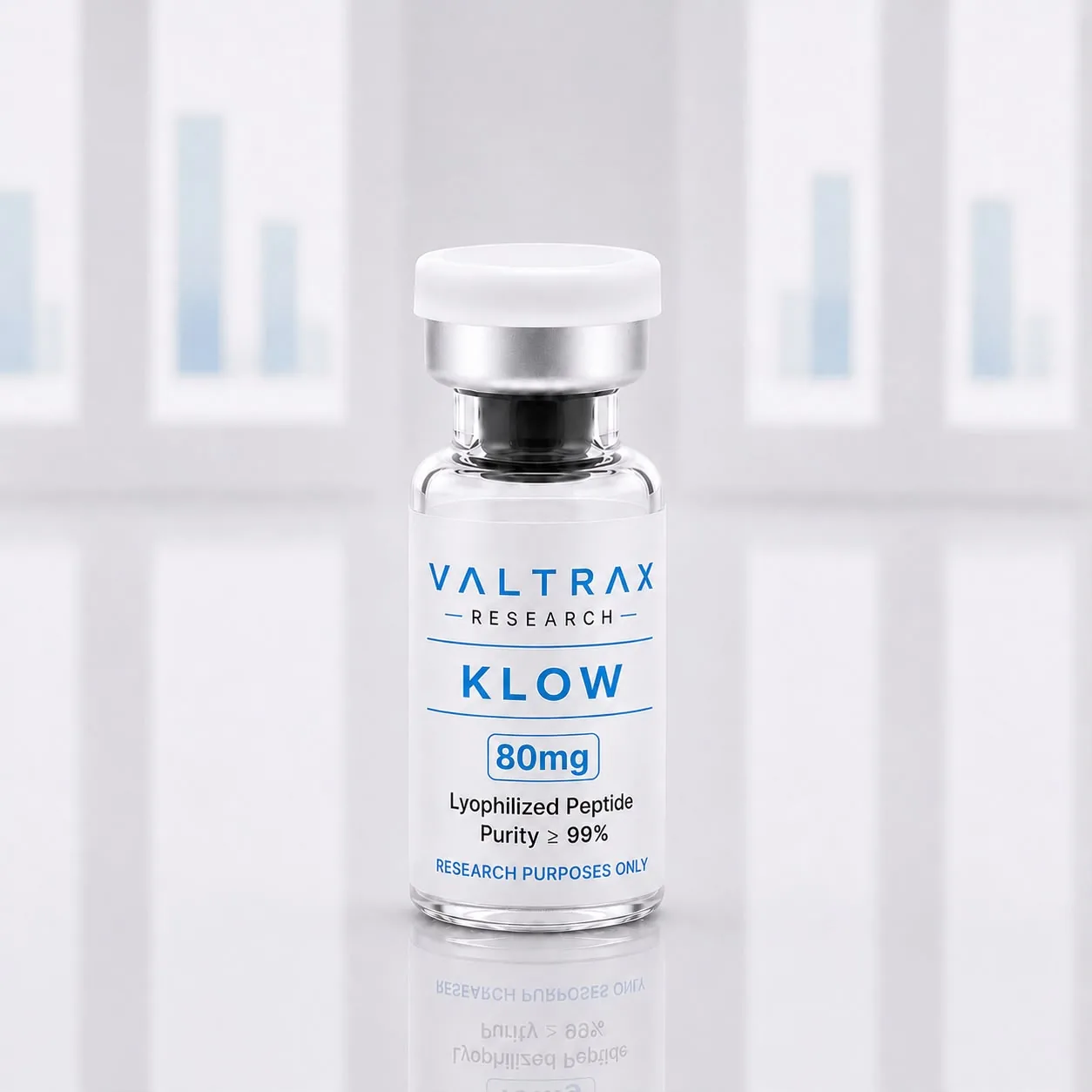
BPC-157 and TB-500 are the most frequently paired research peptides, and the papers that combine them cite the mechanistic split as the reason: BPC-157 has an angiogenic and cytoprotective published profile, while TB-500 acts on actin sequestration and cell migration. Neither duplicates the other. On the cosmetic side, GLOW and KLOW build around GHK-Cu, which drives collagen synthesis and matrix remodelling, combined with repair peptides that act on the vascular and migratory side of the same process. In both cases the combination is deliberate rather than a matter of convenience.

What a blend costs you experimentally

Attribution is the problem. If a combined preparation produces a measurable result, the design cannot say which component was responsible or whether the two interacted, and dose-ranging becomes considerably harder because the ratio between components is fixed by the vial. Any protocol that needs a clean independent variable should use single compounds. The reasonable use for a blend is a study where the combination is itself the object of interest, or a replication of published work that used the same combination.

Testing and reconstitution for multi-component vials

Blends are tested the same way single compounds are — Janoshik confirms identity and quantifies purity for the preparation. Reconstitution follows the same rules: bacteriostatic water directed against the vial wall, gentle swirling rather than shaking, and 2–8 °C storage once in solution. Because the component ratio is fixed at manufacture, concentration maths applies to the preparation as a whole; the individual component amounts are given on each product page.

Questions

Blends & Stacks peptides — common questions

What is a peptide blend?
A single lyophilized vial containing two or more peptide sequences in a fixed ratio. The published rationale for blending is usually mechanistic complementarity — combining compounds that act through unrelated pathways toward the same research endpoint.
Why are BPC-157 and TB-500 combined?
They act through unrelated mechanisms — BPC-157 on angiogenesis and cytoprotection, TB-500 on actin sequestration and cell migration. Papers that pair them cite that lack of overlap as the rationale.
Should I choose a blend or single compounds?
A blend cannot tell you which component produced an observed effect, and its fixed ratio limits dose-ranging. If the combination itself is what you are studying, or you are replicating published work that used it, a blend is appropriate. If you need a clean independent variable, use single compounds.
Are blends tested to the same standard?
Yes. Janoshik Analytical tests every lot, blends included, confirming identity by mass spectrometry and purity by RP-HPLC at 99% or better.
Laboratory Use Only

Everything Valtrax Research ships is bench material for in-vitro work. None of it is a drug, a supplement, a cosmetic, or a medical device, and none of it is intended for human or animal use, ingestion, or administration. Placing an order is your confirmation that you are a qualified researcher buying for lawful research, under every Canadian law and regulation that applies to you.