

Valtrax Research is opening — leave your email and we'll ping you the moment the first compounds are listed.

Every lot tested by Janoshik Analytical

06 / Shelf

Longevity & Mitochondrial Peptides

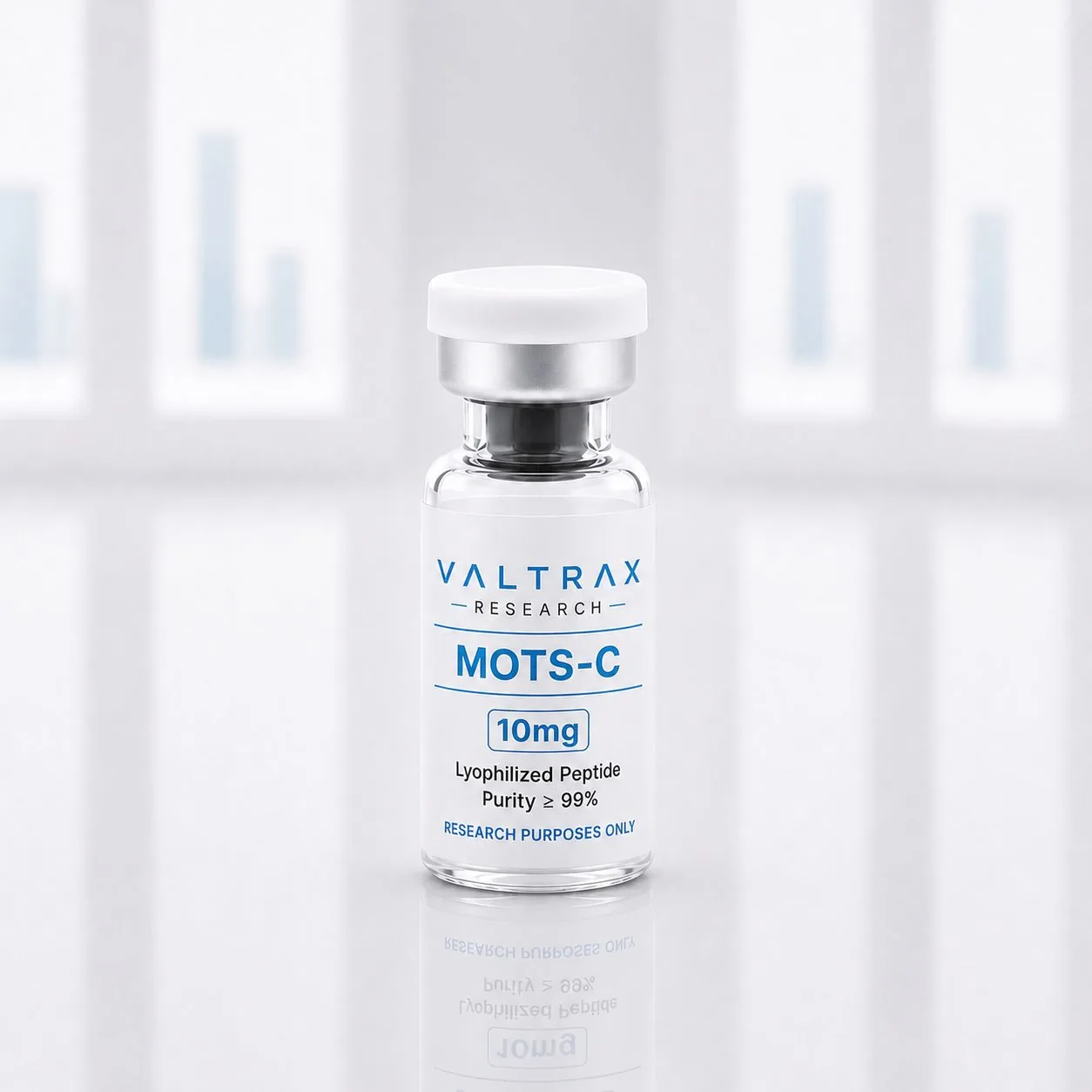
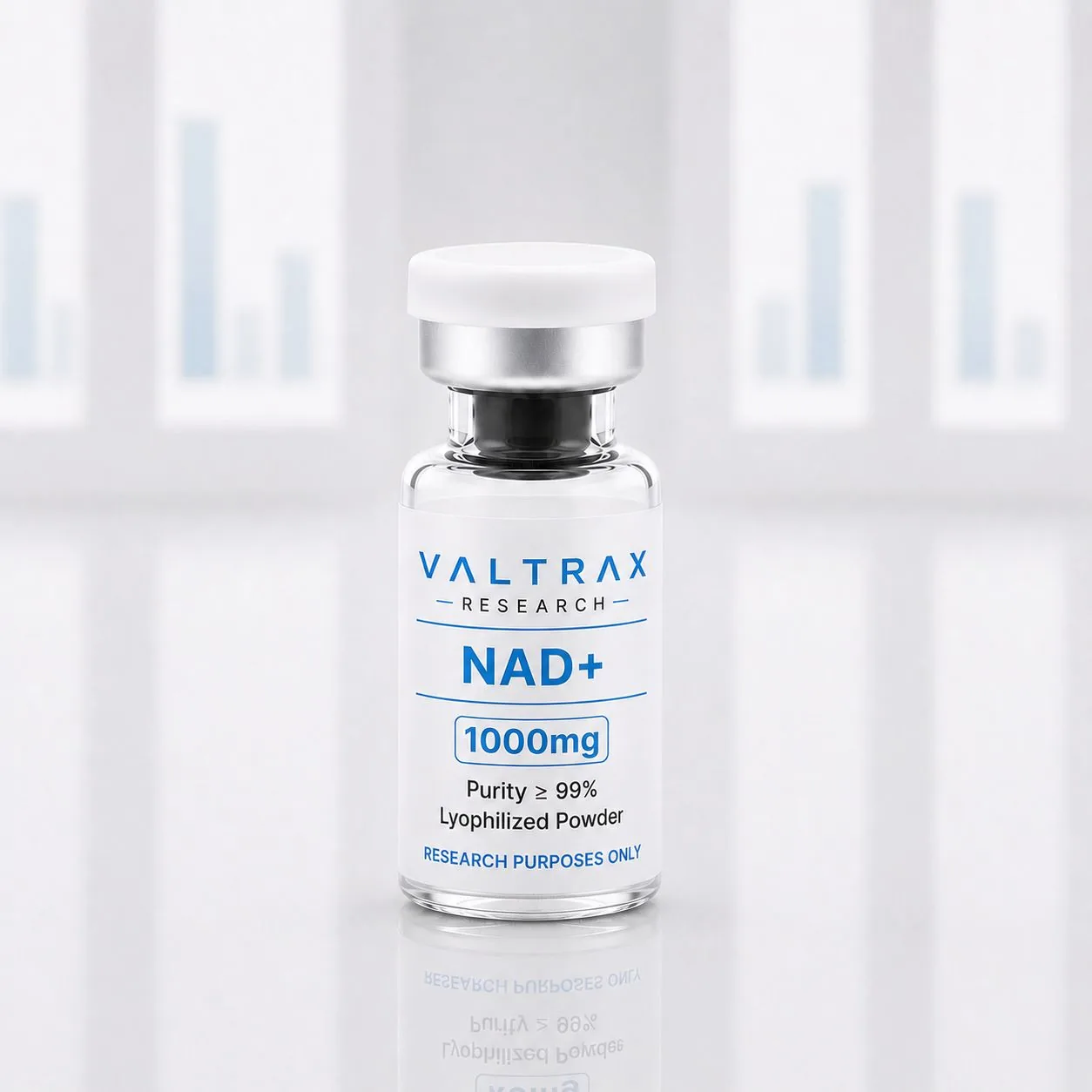
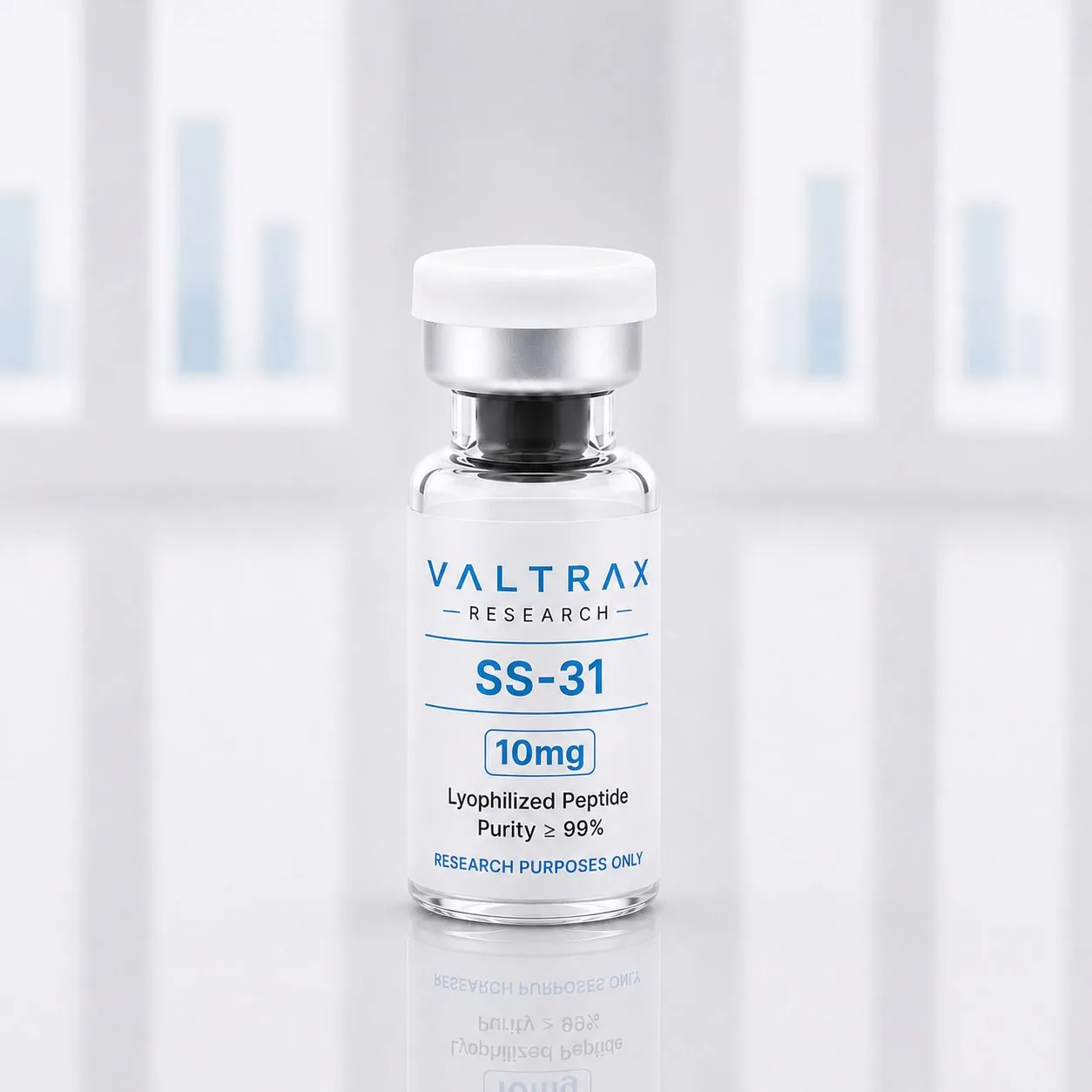
This shelf collects the compounds studied under the headings of longevity, anti-aging and mitochondrial function. MOTS-c is a mitochondrial-derived peptide encoded in mitochondrial DNA rather than the nucleus. SS-31 is a tetrapeptide that localises to the inner mitochondrial membrane. NAD+ is not a peptide at all but the central redox cofactor whose decline with age underpins much of the sirtuin literature. What links them is subject matter — cellular energy production and oxidative stress — rather than chemistry.

Mitochondrial-derived peptides

MOTS-c belongs to a small class of peptides encoded within mitochondrial DNA, discovered only in the last fifteen years. Its published research covers AMPK activation, insulin sensitivity and the metabolic response to exercise, and it is often described in the literature as an exercise mimetic on that basis. Circulating MOTS-c declines with age in the reported human data, which is the observation that pulled it into longevity research. The related peptide humanin comes from the same genomic region and has a parallel literature on cytoprotection.

SS-31 and cardiolipin targeting

SS-31, also called elamipretide, is a tetrapeptide with an alternating aromatic-cationic structure that causes it to concentrate at the inner mitochondrial membrane, where it binds cardiolipin. Cardiolipin organises the electron transport chain, and its peroxidation is one of the better-characterised features of mitochondrial dysfunction. The published research therefore covers ATP production efficiency, reactive oxygen species and mitochondrial cristae structure — it has been studied in heart failure, in ischemia-reperfusion models and in age-related muscle decline. It is one of the few compounds on this shelf with a substantial clinical trial record.

NAD+ and the sirtuin literature

NAD+ is the electron carrier at the centre of oxidative metabolism and the obligate cosubstrate for the sirtuins and PARPs. Tissue NAD+ falls with age across every species measured, and restoring it is the premise behind a large body of work on precursors such as NMN and NR. Supplying NAD+ directly rather than as a precursor produces different pharmacokinetics, which is the distinction the comparative literature turns on. Note that NAD+ is a nucleotide cofactor, not a peptide — it sits on this shelf because the research question is the same one.

Questions

Longevity & Mitochondrial peptides — common questions

What are longevity peptides?
An informal grouping for compounds whose published research concerns cellular aging — principally mitochondrial-derived peptides such as MOTS-c, mitochondrial-targeting peptides such as SS-31, and cofactors such as NAD+. The literature covers mitochondrial function, oxidative stress and metabolic signalling in animal and clinical models.
What does MOTS-c do in research models?
MOTS-c is a peptide encoded in mitochondrial DNA. Published research reports AMPK activation, effects on insulin sensitivity and a role in the metabolic response to exercise. Circulating levels decline with age in reported human data.
Is NAD+ a peptide?
No. NAD+ is a nucleotide cofactor rather than a peptide. It appears on this shelf because it is studied for the same questions — mitochondrial function and cellular aging — as the peptides alongside it.
How should mitochondrial peptides be stored?
Lyophilized vials should be kept frozen for long-term storage. Once reconstituted with bacteriostatic water, keep them at 2–8 °C and protected from light, and avoid repeated freeze-thaw cycles.
Laboratory Use Only

Everything Valtrax Research ships is bench material for in-vitro work. None of it is a drug, a supplement, a cosmetic, or a medical device, and none of it is intended for human or animal use, ingestion, or administration. Placing an order is your confirmation that you are a qualified researcher buying for lawful research, under every Canadian law and regulation that applies to you.