

Valtrax Research is opening — leave your email and we'll ping you the moment the first compounds are listed.

Every lot tested by Janoshik Analytical

05 / Shelf

Nootropic & Neuromodulatory Peptides

Selank and Semax are the two best-documented peptides in what is loosely called the nootropic category. Both were developed in Russia, both are short synthetic sequences derived from endogenous regulatory peptides, and both have a published literature — much of it Russian-language — covering BDNF expression, monoamine signalling and behavioural measures of anxiety and cognition. They are studied intranasally more often than by any other route, a consequence of their size and the olfactory pathway to the central nervous system.

Semax and the ACTH(4-10) derivatives

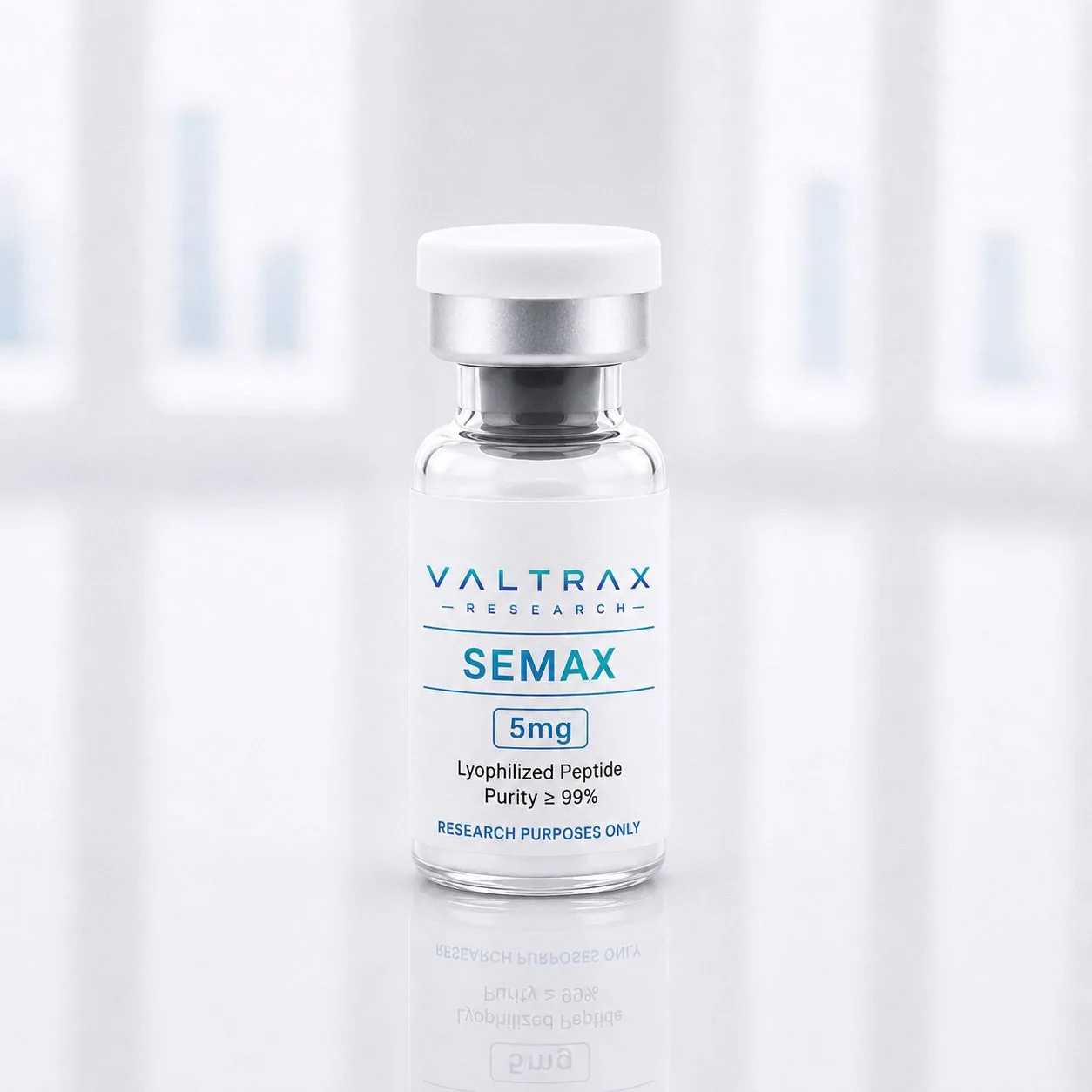
Semax is a heptapeptide derived from ACTH(4-10), modified so that it retains neurotropic activity without the corticotropic effects of the parent hormone. The published research concentrates on BDNF and NGF expression in the hippocampus, on dopaminergic and serotonergic modulation, and on neuroprotection in ischemic models — it has been studied in stroke settings in Russian clinical work. What makes it interesting as a research compound is the speed of the reported BDNF response, which appears in the literature within hours rather than days.

Selank and the tuftsin analogues

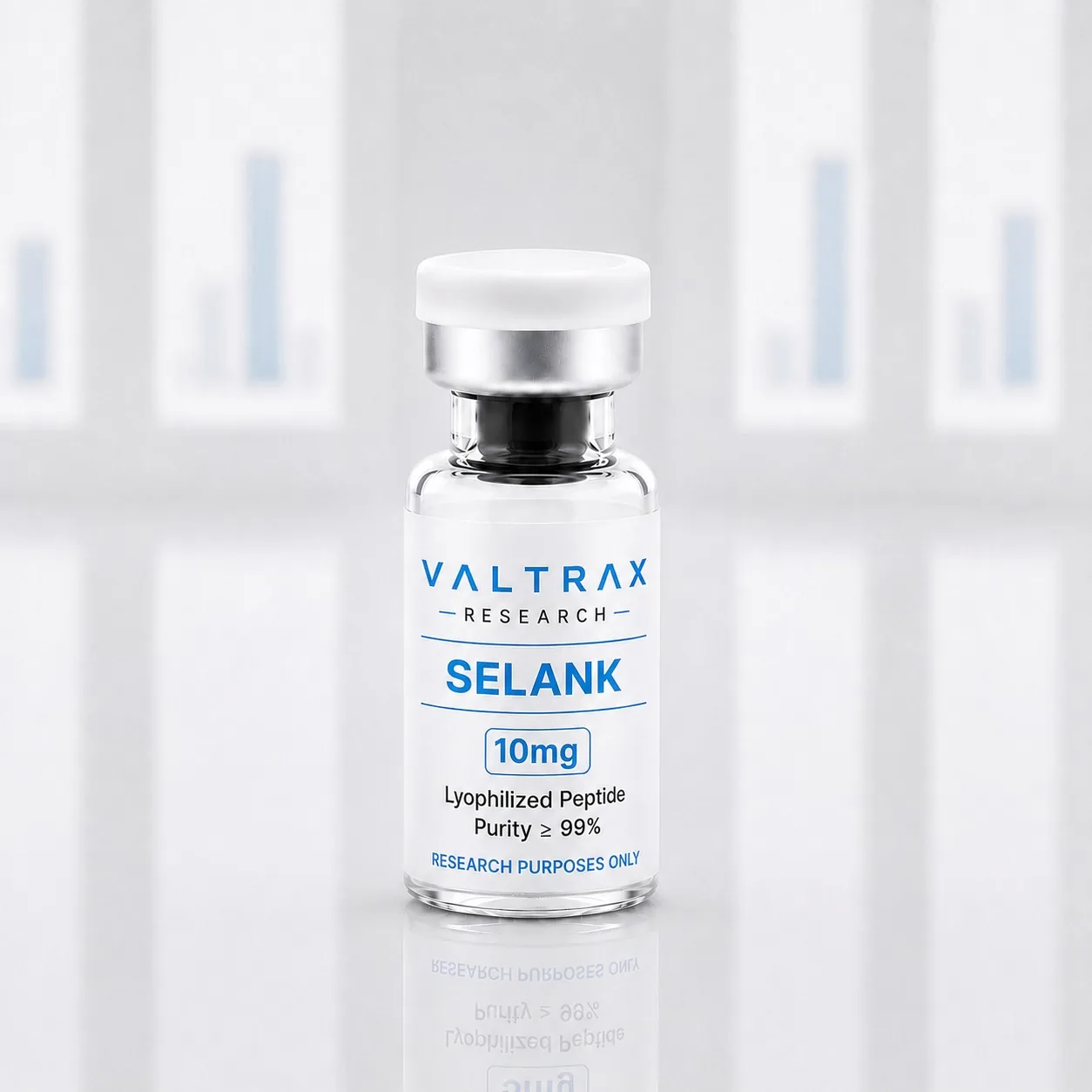
Selank is a synthetic analogue of tuftsin, an immunomodulatory tetrapeptide fragment, extended with a stabilising sequence. Its literature is more anxiolytic than cognitive: published work reports effects on GABAergic signalling and on the expression of genes associated with anxiety, alongside changes in serotonin metabolism. It is frequently studied against benzodiazepine comparators, and the reported distinction — anxiolytic activity without sedation or dependence findings in the animal models — is the reason it draws attention. Its immunomodulatory lineage also gives it a separate small literature on interleukin expression.

Route, stability and handling

Both compounds appear in the literature most often as intranasal preparations, which is why they are frequently reconstituted at higher concentrations than injectable peptides of similar size. They ship lyophilized and should be reconstituted with bacteriostatic water, swirled rather than shaken, and kept at 2–8 °C once in solution. Both are small — Semax is a heptapeptide, Selank a heptapeptide — and consequently more robust than larger sequences, but neither tolerates repeated freeze-thaw cycling.

Questions

Nootropic & Neuromodulatory peptides — common questions

What are nootropic peptides?
An informal grouping for peptides whose published literature concerns cognition, neuroprotection or anxiety-related behaviour — principally Semax and Selank. The research covers BDNF and NGF expression, monoamine signalling and behavioural measures in animal models. These are laboratory research compounds, not for human or animal use.
What is the difference between Semax and Selank?
Semax derives from ACTH(4-10) and its literature centres on BDNF/NGF expression and neuroprotection. Selank is a tuftsin analogue whose published work is largely anxiolytic, covering GABAergic signalling and anxiety-associated gene expression. They come from different parent molecules and are studied for different endpoints.
Why are these peptides studied intranasally?
Both are small peptides that cross poorly by oral route, and the intranasal pathway provides access to the central nervous system via the olfactory route. The great majority of the published protocols for both compounds use intranasal administration.
Is purity verified for these compounds?
Yes. Every lot is tested independently by Janoshik Analytical for identity by mass spectrometry and purity by RP-HPLC at 99% or better.
Laboratory Use Only

Everything Valtrax Research ships is bench material for in-vitro work. None of it is a drug, a supplement, a cosmetic, or a medical device, and none of it is intended for human or animal use, ingestion, or administration. Placing an order is your confirmation that you are a qualified researcher buying for lawful research, under every Canadian law and regulation that applies to you.