

Valtrax Research is opening — leave your email and we'll ping you the moment the first compounds are listed.

Every lot tested by Janoshik Analytical

09 / Shelf

Supplies & Diluents Peptides

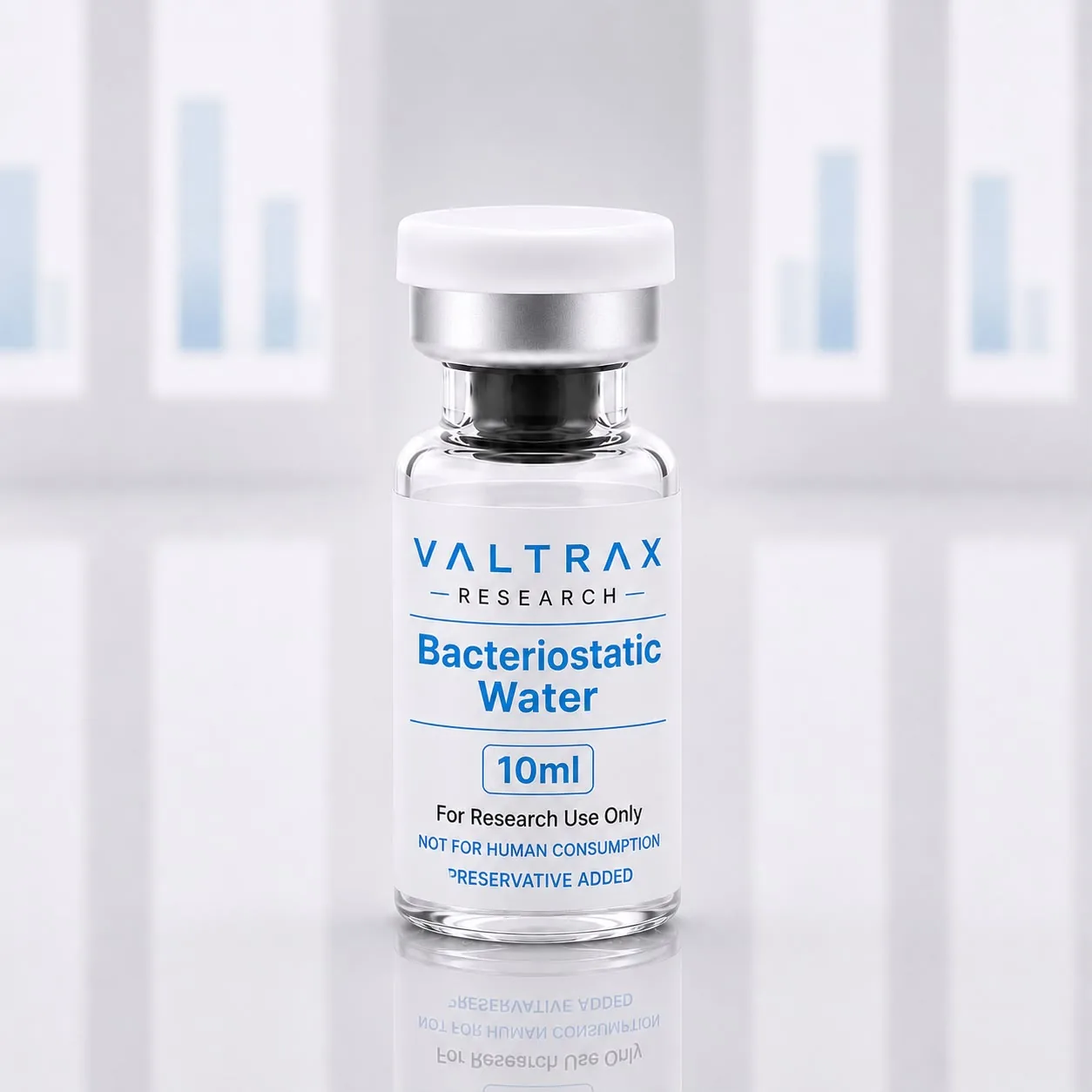
Lyophilized peptides need a diluent, and the choice of diluent affects how long a reconstituted vial remains usable. Bacteriostatic water — sterile water with 0.9% benzyl alcohol as a preservative — is the standard for multi-use vials because the preservative suppresses microbial growth across repeated withdrawals. Plain sterile water contains no preservative and is appropriate only for single-use preparations. This shelf carries the diluents and consumables that go with everything else in the catalogue.

Bacteriostatic water versus sterile water

The difference is the 0.9% benzyl alcohol. That preservative allows a vial to be entered repeatedly over a period of weeks without supporting microbial growth, which is why bacteriostatic water is the default for any lyophilized peptide intended for more than one withdrawal. Sterile water for injection contains no preservative: once the stopper is pierced, the contents should be treated as single-use. Benzyl alcohol is not inert with respect to every peptide, and a small number of published protocols specify plain sterile water or a buffered diluent for that reason.

Reconstitution technique

Direct the diluent stream against the inside wall of the vial rather than onto the powder cake — peptides are surfactants and a direct stream generates foam, which means denatured material. Let the cake dissolve on its own, swirling gently if it needs help; never shake. If any material remains undissolved after a few minutes, gentle warming to room temperature in the hand usually resolves it. Calculate the volume you need first: our peptide calculator converts vial strength and diluent volume into concentration per unit volume.

Storage after reconstitution

Reconstituted peptides belong at 2–8 °C, protected from light, and are best used within the window given on the individual product page — typically several weeks in bacteriostatic water, considerably less in plain sterile water. Unopened lyophilized powder is far more stable and should be kept frozen if it will sit for months. Repeated freeze-thaw cycling is the most common avoidable cause of degradation, so aliquot before freezing if a vial will be drawn on more than once.

Questions

Supplies & Diluents peptides — common questions

What is bacteriostatic water?
Sterile water containing 0.9% benzyl alcohol as a preservative. The preservative suppresses microbial growth, which allows a vial to be entered repeatedly over several weeks — the reason it is the standard diluent for reconstituting lyophilized research peptides.
What is the difference between bacteriostatic and sterile water?
Sterile water contains no preservative and should be treated as single-use once the stopper is pierced. Bacteriostatic water contains 0.9% benzyl alcohol and supports repeated withdrawals from the same vial.
How much diluent should I use?
It depends on the vial strength and the concentration your protocol calls for. Our peptide calculator converts vial strength and diluent volume into concentration per unit volume for any combination in the catalogue.
How long does a reconstituted vial last?
Typically several weeks at 2–8 °C when reconstituted with bacteriostatic water and protected from light, though the window varies by compound and is given on each product page. Unopened lyophilized powder stored frozen lasts considerably longer.
Laboratory Use Only

Everything Valtrax Research ships is bench material for in-vitro work. None of it is a drug, a supplement, a cosmetic, or a medical device, and none of it is intended for human or animal use, ingestion, or administration. Placing an order is your confirmation that you are a qualified researcher buying for lawful research, under every Canadian law and regulation that applies to you.