Cart
Your cart is empty
Find
Tetrapeptide · cardiolipin-binding · aka elamipretide
A cardiolipin-binding tetrapeptide (D-Arg-Dmt-Lys-Phe), also filed as elamipretide. Supplied as a lyophilized powder for research purposes only.
Launch Sale · Ends Nov 6
Tested lot by lot at ≥99% purity. The Janoshik certificate for your lot is emailed with the order.
Everything Valtrax Research ships is bench material for in-vitro work. None of it is a drug, a supplement, a cosmetic, or a medical device, and none of it is intended for human or animal use, ingestion, or administration. Placing an order is your confirmation that you are a qualified researcher buying for lawful research, under every Canadian law and regulation that applies to you.
Four residues, one alternating cationic–aromatic motif (D-Arg-Dmt-Lys-Phe), and a single trick: the molecule slips across the outer mitochondrial membrane without a transporter and parks on cardiolipin in the inner membrane. SS-31 — also filed as elamipretide — is built around that selectivity, which is why a peptide this small concentrates where it does.
What it binds is the point. Cardiolipin holds the respiratory supercomplexes in shape; when it oxidizes, the cristae loosen and electron transport leaks. Work on the bench uses SS-31 to ask what stabilizing that lipid does to a failing bioenergetic system.
The through-line is cardiolipin. Reports track how SS-31 binding affects inner-membrane structure, respiratory-chain efficiency, and ROS production, then test whether protecting that one lipid changes outcomes in stressed tissue. Recent papers span fibrotic lung, injured skeletal muscle, and cryopreserved cells — different systems, the same mitochondrial premise.
The readout most groups chase is the inner membrane. SS-31 associates with cardiolipin, and the downstream measures follow from that: cristae geometry, supercomplex assembly, ATP output, and the rate at which the electron-transport chain spills reactive oxygen. The peptide is the lever; mitochondrial energetics are the dependent variable.
Sabbah and colleagues have summarized the elamipretide mechanism, and the 2025 literature pushes it into tissue-level questions — pulmonary fibrosis, traumatic muscle injury, sperm cryopreservation — each treating cardiolipin protection as the shared upstream cause.
SS-31 traces to Hazel Szeto and Peter Schiller's work on a series of small, cell-permeant aromatic-cationic peptides — the SS (Szeto-Schiller) series — designed to cross membranes and concentrate in mitochondria without a carrier. The fourth member of that screen became the one that stuck.
Under the clinical name elamipretide it moved into trials for mitochondrial myopathies and heart failure, and that dual identity is why the same compound shows up in the literature under two labels.
In vitro and animal studies
SS-31, also known as elamipretide and formerly MTP-131, is a synthetic tetrapeptide with an alternating aromatic-cationic structure. That structure is functional rather than incidental: it causes the peptide to concentrate selectively at the inner mitochondrial membrane, reaching local concentrations far above those elsewhere in the cell, without requiring a membrane potential to accumulate.
Once there it binds cardiolipin, the signature phospholipid of the inner mitochondrial membrane. Cardiolipin organises the respiratory supercomplexes of the electron transport chain and maintains cristae architecture, and its peroxidation is one of the best-characterised molecular features of mitochondrial dysfunction in ageing and disease.
The preclinical literature follows from that mechanism and is substantial. Studies report improved ATP production efficiency, reduced reactive oxygen species generation, preserved cristae structure, and functional protection in models of ischemia-reperfusion injury, heart failure, acute kidney injury and age-related skeletal muscle decline. The mechanism is unusually well specified for a compound in this catalogue.
Human data, where it exists
SS-31 has by far the most developed clinical programme of anything on the longevity shelf. Stealth BioTherapeutics advanced elamipretide into multiple controlled human trials, and the results are genuinely mixed in a way that is worth stating accurately.
In primary mitochondrial myopathy, the MMPOWER-3 phase 3 trial did not meet its primary endpoint. In Barth syndrome, a rare genetic disorder involving defective cardiolipin remodelling — the mechanism SS-31 directly targets — the TAZPOWER trial and its open-label extension reported functional improvements over longer treatment periods, and elamipretide has been pursued for that indication through regulatory review. Trials have also been conducted in dry age-related macular degeneration and in heart failure.
Elamipretide does not hold general marketing approval. What this record provides that almost nothing else here does is real controlled human safety and efficacy data, including negative results — which are as informative as positive ones and are routinely omitted from promotional material.
Common assertions, and what the record supports
The claim that SS-31 targets mitochondria specifically is true and unusually well substantiated. The cardiolipin-binding mechanism is characterised at a level of molecular detail rare in this field.
The claim that it is a proven mitochondrial repair agent overstates the clinical record. The phase 3 failure in primary mitochondrial myopathy is a real result. It indicates that a compelling mechanism and strong preclinical data did not translate into a clinical benefit for that population on that endpoint — the ordinary and instructive outcome of drug development.
The Barth syndrome results are more encouraging and also more specific: that condition involves a defect in cardiolipin remodelling, so it is the population where a cardiolipin-targeting compound would be most expected to work. Generalising from a rare disease with a directly matched mechanism to healthy ageing is a substantial and unsupported leap.
Claims about anti-ageing effects in healthy people have no supporting human trial data.
Against the compounds it is most often confused with
Against MOTS-c, both target mitochondria and do so completely differently. SS-31 physically localises to the inner membrane and stabilises cardiolipin, a structural intervention. MOTS-c is an endogenous signalling peptide acting through AMPK and nuclear gene expression. SS-31 also has controlled human trial data, including negative results; MOTS-c has none.
Against NAD+ and its precursors, the distinction is substrate versus structure. NAD+ approaches supply or spare the redox cofactor that mitochondrial metabolism consumes. SS-31 targets the membrane platform on which that metabolism is organised. In principle complementary; neither established in healthy human ageing.
Against the antioxidant framing often applied to this shelf, SS-31 is not a conventional radical scavenger. It reduces reactive oxygen species generation by improving electron transport chain efficiency, which is a different and more targeted mechanism than mopping up radicals after the fact.
Adverse findings, toxicology gaps, material hazards
SS-31 has a real clinical safety dataset, which is unusual here and worth using. Reported adverse effects in trials were predominantly injection site reactions, which were common enough to be a practical limitation of the subcutaneous formulation. Gastrointestinal effects and headache were also reported.
The more important caution concerns interpretation rather than toxicity. A failed phase 3 endpoint is a signal that the compound did not do what its mechanism predicted in that population. Using it outside any studied indication means operating well beyond where the evidence, positive or negative, extends.
Mitochondrial function is not uniformly desirable to maximise. Reactive oxygen species have physiological signalling roles, including in exercise adaptation and in the process by which damaged cells are eliminated. Chronic pharmacological suppression of mitochondrial ROS has consequences that have not been characterised in healthy humans.
Long-term safety beyond trial durations, and safety in populations without mitochondrial disease, remain unestablished.
Bench practice for this compound
SS-31 is a tetrapeptide, short and comparatively stable, and it dissolves readily. Reconstitute with bacteriostatic water directed against the vial wall and swirl gently rather than shaking.
Store reconstituted solutions at 2–8 °C protected from light and observe the working window given on this page. Keep unopened lyophilized powder frozen for long-term storage, and aliquot before freezing if the vial will be drawn on more than once.
This summary describes published research. It is not a protocol, not a recommendation, and not a statement that this compound is safe or effective for any use. Not for human or animal use.
Sabbah, H.N. et al. (2025). Contemporary insights into elamipretide’s mitochondrial mechanism of action and therapeutic effects.
PubMedNajafi, A. et al. (2025). Elamipretide enhances post-thaw rooster sperm quality by mitigating oxidative stress and optimizing mitochondrial function during cryopreservation.
PubMedHeo, J. et al. (2025). Acute mitochondrial reactive oxygen species emissions drive mitochondrial dysfunction after traumatic muscle injury in male mice.
PubMedGu, Q. et al. (2025). SS-31: A promising therapeutic agent against bleomycin-induced pulmonary fibrosis in mice.
PubMedIndependent testing lot by lot: identity, purity, net content.
Janoshik Analytical, a laboratory Valtrax does not own, runs the testing — identity by mass spectrometry, purity by RP-HPLC at ≥99%, on the lot you receive.
Same Shelf
Longevity & Mitochondrial
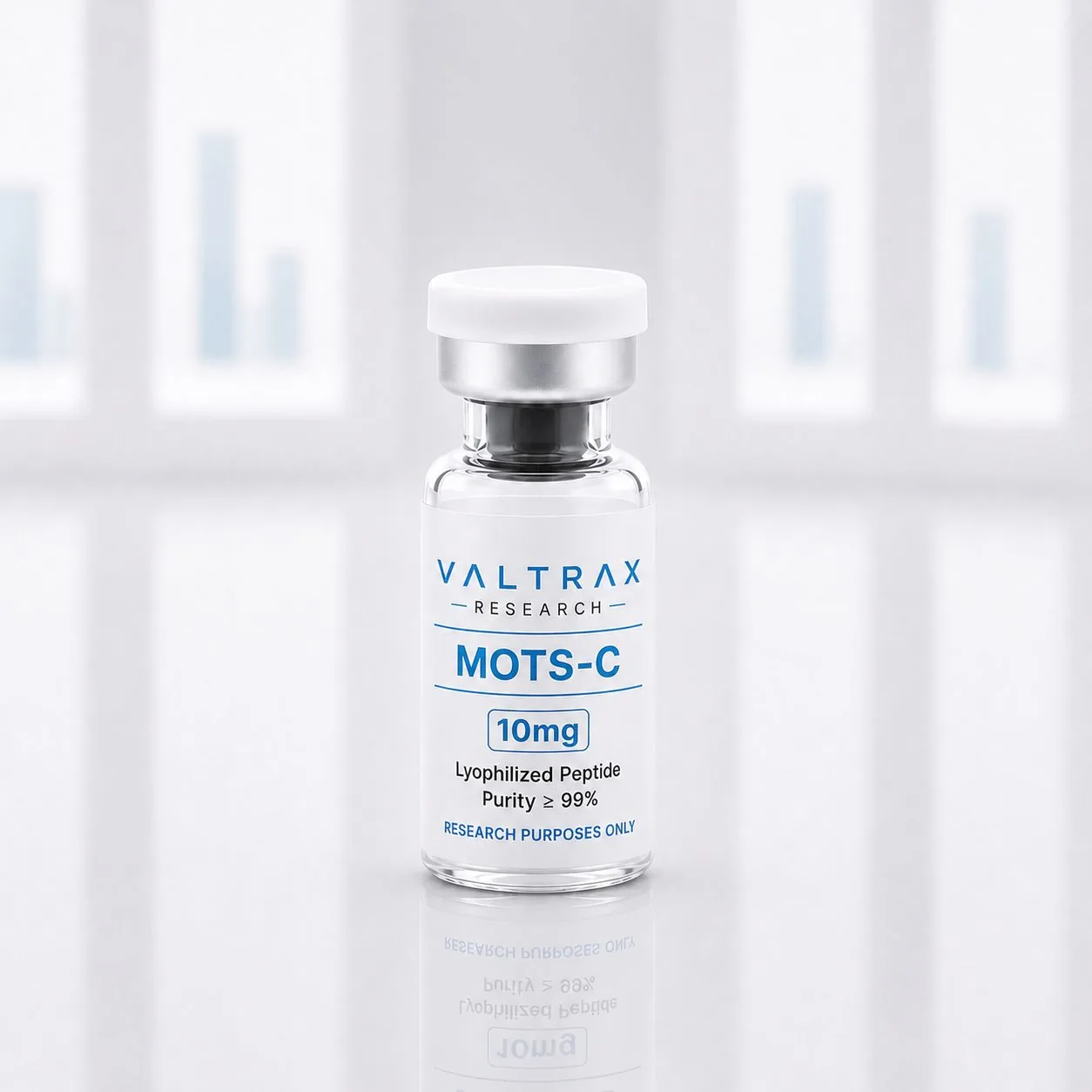
$48.00
$60.00
10mg
A 16-residue peptide encoded inside the mitochondrial 12S rRNA gene rather than the nuclear genome. Supplied as a lyophilized powder for research purposes only.
Longevity & Mitochondrial
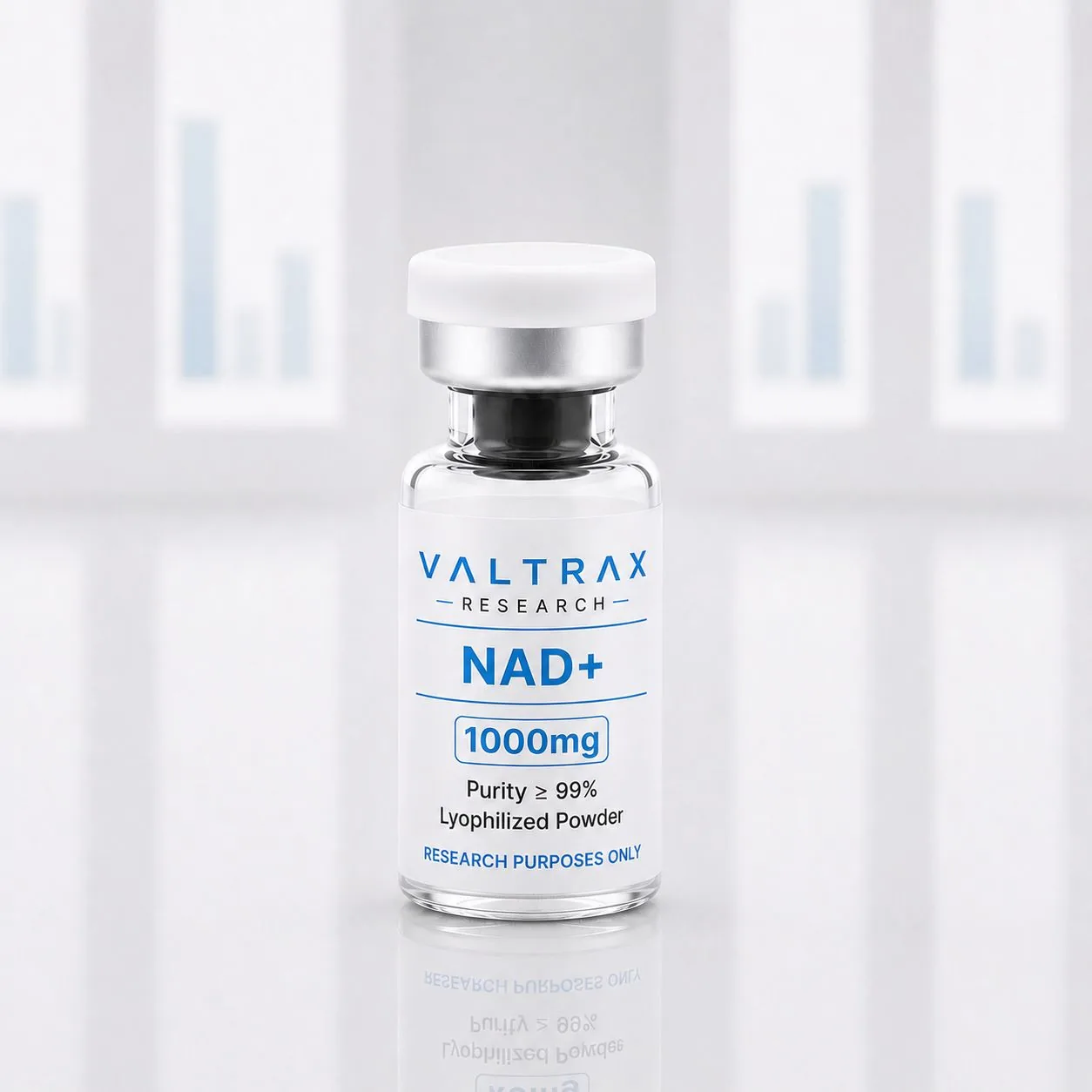
$80.00
$100.00
1000mg
Nicotinamide adenine dinucleotide, the redox coenzyme that shuttles electrons through nearly every cellular redox step. Supplied as a lyophilized powder for research purposes only.
Longevity & Mitochondrial
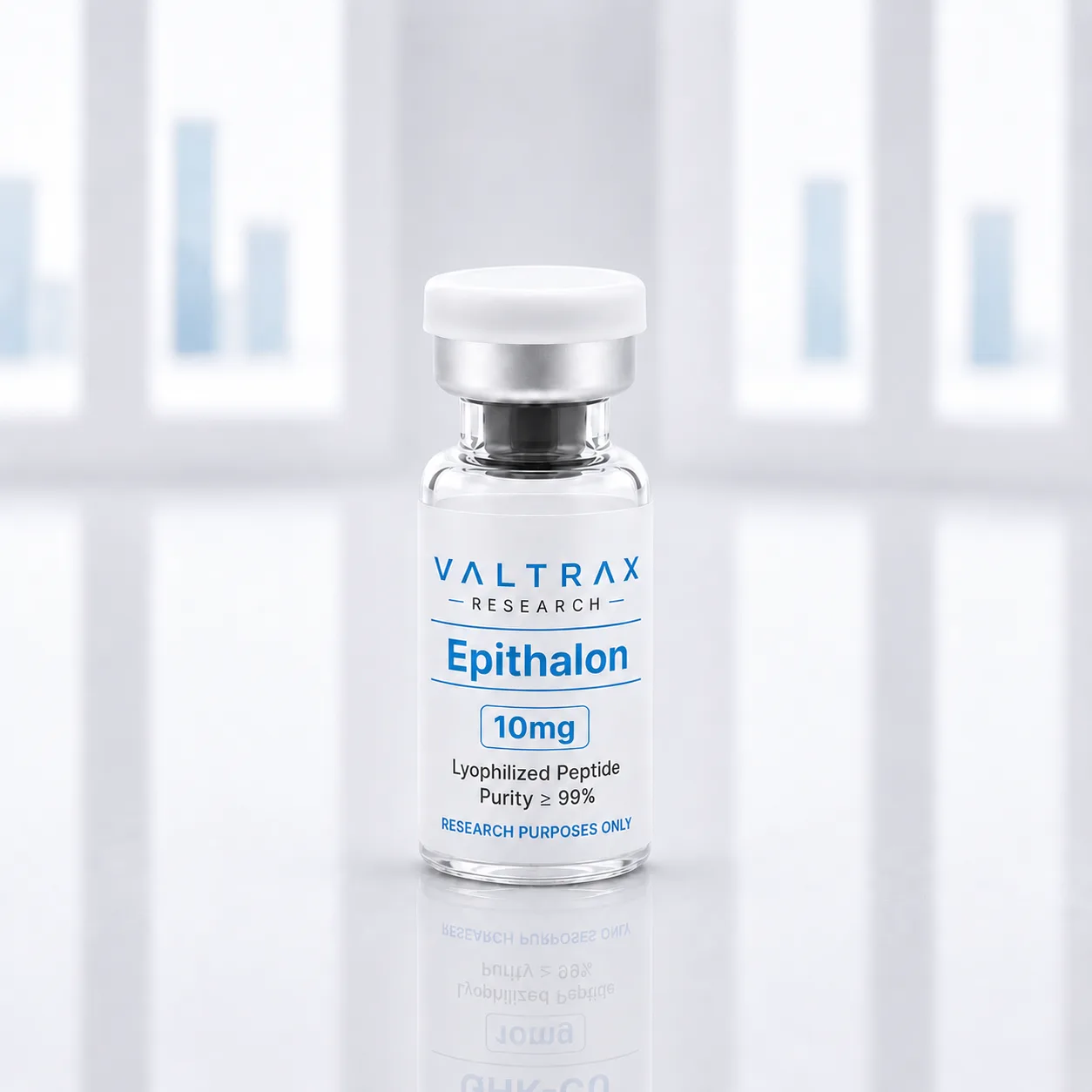
$32.00
$40.00
10mg