Valtrax Research is opening — leave your email and we'll ping you the moment the first compounds are listed.
Every lot tested by Janoshik Analytical


Cart
Your cart is empty
Find
Valtrax Research is opening — leave your email and we'll ping you the moment the first compounds are listed.
Your cart is empty
Thymosin β4 fragment · 43 residues · actin-binding
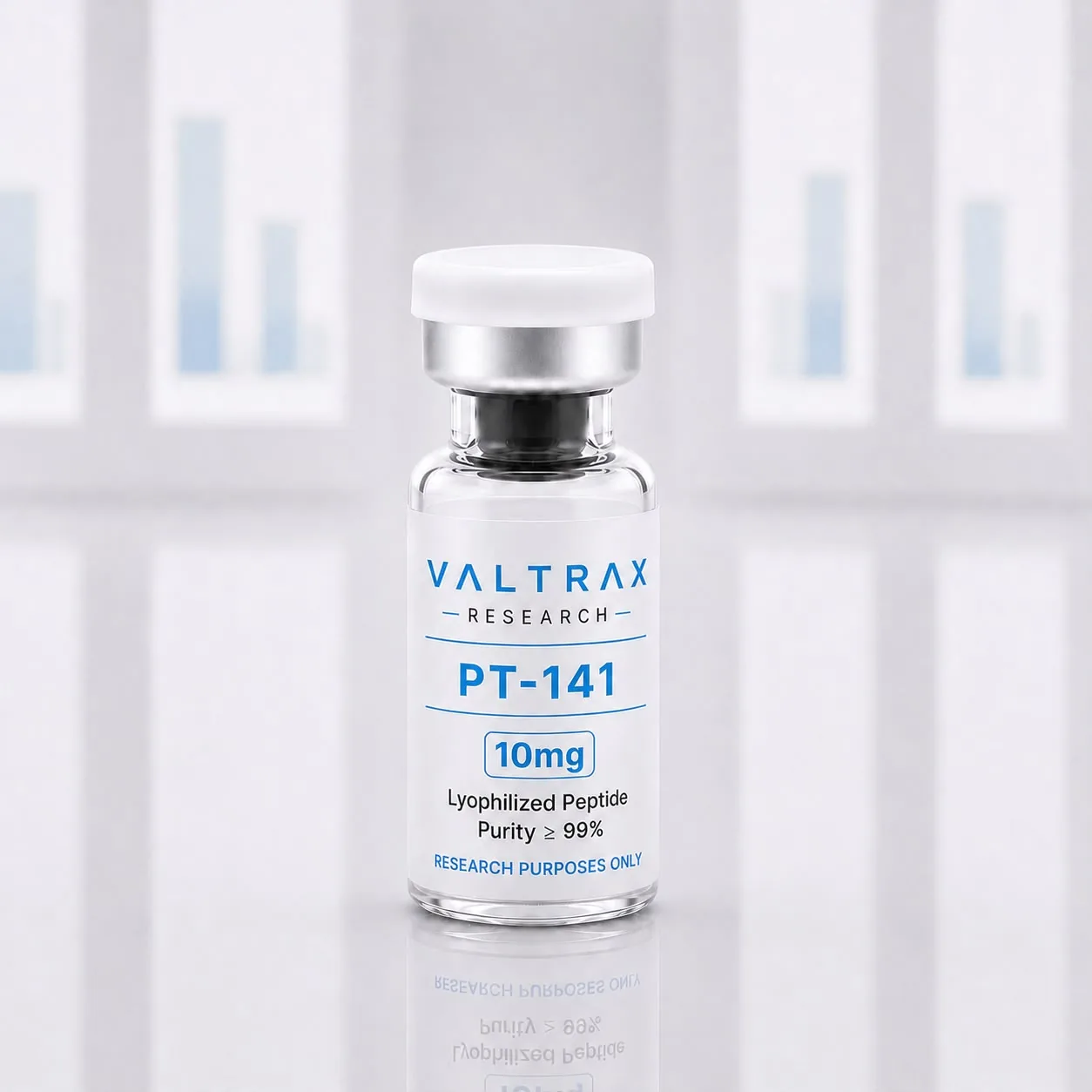
Thymosin Beta-4 fragment. A 43-amino acid synthetic peptide. Supplied as a lyophilized powder for research purposes only.
Catalog opens shortly. Leave your address and we will ping you the moment this compound is orderable.
Tested lot by lot at ≥99% purity. The Janoshik certificate for your lot is emailed with the order.
Everything Valtrax Research ships is bench material for in-vitro work. None of it is a drug, a supplement, a cosmetic, or a medical device, and none of it is intended for human or animal use, ingestion, or administration. Placing an order is your confirmation that you are a qualified researcher buying for lawful research, under every Canadian law and regulation that applies to you.
TB-500 is the synthetic version of a 43-residue stretch of thymosin β4 — the parent protein is one of the most abundant peptides inside motile cells, and its job is to hold a reserve pool of G-actin monomers. The fragment keeps the part that does the binding, including the central actin-contact motif most of the activity is pinned to.
That actin handle is the whole reason it stays on the bench. Sequester or release monomeric actin and you change how a cell builds and tears down its cytoskeleton — which is the lever behind the migration and wound-closure models that keep returning to this peptide.
Everything routes back to actin. The literature on thymosin β4 / TB-500 measures cell migration, wound closure, and tissue remodeling, then ties those outputs to the peptide’s grip on monomeric actin. Cardiac and dermal preparations recur because both depend on cells moving into a damaged field.
Strip TB-500 down and the mechanism is actin handling. The peptide carries thymosin β4’s actin-sequestering motif, so studies read it through the cytoskeleton: how monomer availability shifts, how cells polarize, and how that translates into directed migration across a wound bed.
The foundational papers are about the parent protein — Malinda on wound closure, Bock-Marquette on cardiac cell migration and survival, Smart on epicardial progenitor mobilization. TB-500 inherits that record as the synthetic, defined-sequence stand-in used to probe the same actin-driven behaviors.
Thymosin β4 first surfaced in thymic-extract work, catalogued among the thymosins before its real function — binding and buffering G-actin — was understood. Once the actin role was clear, attention shifted from immunology to cytoskeletal dynamics and tissue repair.
TB-500 is the practical offshoot: a synthesized fragment that keeps the active region, giving labs a defined sequence to study where the full protein would be cumbersome to work with.
In vitro and animal studies
TB-500 corresponds to the actin-binding region of thymosin beta-4, a 43-residue protein present in most mammalian cells and one of the most abundant intracellular proteins in the body. The mechanism is well characterised at the molecular level: thymosin beta-4 sequesters G-actin monomers, and by regulating the pool available for polymerisation it governs cytoskeletal remodelling and therefore cell migration.
Because migration underlies wound closure, the preclinical record spans several tissues. Rodent and rabbit work reports accelerated dermal wound repair, corneal epithelial healing after injury, and improved outcomes in cardiac models following induced infarction, where the reported mechanism combines cardiomyocyte survival with epicardial progenitor activation. Additional studies describe reduced fibrosis and increased vessel density in the healing field.
A distinction matters when reading this literature and is routinely blurred in material written to sell the compound: most published work uses full-length thymosin beta-4, not the shorter synthetic fragment sold as TB-500. The fragment retains the actin-binding motif and reproduces some effects, but the two are not the same molecule, and evidence generated with one does not transfer automatically to the other.
Human data, where it exists
Full-length thymosin beta-4 has genuinely been through human trials. RegeneRx Biopharmaceuticals advanced formulations into controlled studies in ophthalmology — dry eye disease and neurotrophic keratopathy — and reported results in that setting, along with earlier work in dermal wound indications. That is a real clinical record, and it is the strongest human evidence anywhere near this compound.
It is also not evidence for TB-500 as sold. The ophthalmic trials used full-length thymosin beta-4 delivered topically to the eye. No controlled human trial has evaluated the injected synthetic fragment for tendon, ligament or muscle repair, which is the use the compound is marketed around. Human pharmacokinetics for the fragment have not been published.
TB-500 appears on the World Anti-Doping Agency Prohibited List under S2, alongside growth factors affecting tissue repair and vascularisation. As with any S0/S2 listing, this reflects regulatory and competitive status rather than a specific toxicity finding.
Common assertions, and what the record supports
The dominant claim is that TB-500 heals soft-tissue injury systemically — that it travels to damaged tissue and repairs it wherever it is. The evidence supports a narrower statement: in animal models, thymosin beta-4 improves healing endpoints across several tissue types, with actin sequestration and consequent cell migration as a coherent and well-understood mechanism. That is a genuine and mechanistically sensible finding.
What the evidence does not support is the transfer of those results to injected fragment use in humans, at any particular dose, for any particular injury. The gap is not a technicality. It spans molecule identity, route, species and endpoint simultaneously.
A related claim treats TB-500 and thymosin beta-4 as interchangeable names for one product. They are not, and any sourced material described only as "TB-500" should be understood as the fragment unless a lot-specific result says otherwise.
Against the compounds it is most often confused with
The comparison that matters most is with full-length thymosin beta-4, because the names are used interchangeably and the molecules are not the same. Thymosin beta-4 is the 43-residue native protein and the subject of essentially all the ophthalmic clinical work. TB-500 is a shorter synthetic construct built around the actin-binding motif. It reproduces part of the activity; it is not the molecule that went through those trials.
Against BPC-157, the mechanisms are complementary rather than redundant: actin sequestration and cell migration on one side, angiogenesis and nitric oxide signalling on the other. Papers that combine them cite exactly that split.
Against the growth hormone secretagogues, the difference is categorical. CJC-1295 and ipamorelin act on an endocrine axis to raise systemic GH and IGF-1, producing broad anabolic signalling. TB-500 acts locally on cytoskeletal dynamics and does not engage the GH axis at all.
Adverse findings, toxicology gaps, material hazards
The principal pharmacological concern follows directly from the mechanism. Promoting angiogenesis and cell migration is useful in a healing wound and unhelpful in a malignancy, where both processes support growth and metastasis. Thymosin beta-4 has been reported as upregulated in several tumour types, and some published work associates it with increased invasiveness in cancer cell models. No study demonstrates that administering TB-500 causes cancer; equally, no study excludes an effect on existing disease, and the mechanism makes the question substantive.
Chronic toxicology of the synthetic fragment has not been characterised in any species at the durations commonly discussed. Immunogenicity — antibody formation against a repeatedly injected synthetic peptide — has not been assessed in humans.
On the material side, TB-500 is a short peptide and cheap to make, which historically correlates with wide quality variation between suppliers. Identity confirmation matters here more than usual because the fragment and the full-length protein are frequently conflated at the point of sale.
Bench practice for this compound
TB-500 ships lyophilized and dissolves readily. Direct bacteriostatic water against the vial wall rather than onto the cake, and swirl rather than shake — this peptide is surface-active and foaming denatures material at the air-water interface.
Hold reconstituted vials at 2–8 °C, protected from light, and observe the working window given on this page. Lyophilized powder kept frozen is stable far longer. Avoid repeated freeze-thaw cycling; aliquot first if a vial will be drawn on more than once. Peptide concentration per unit volume for any vial size and diluent volume can be worked out with our calculator.
This summary describes published research. It is not a protocol, not a recommendation, and not a statement that this compound is safe or effective for any use. Not for human or animal use.
Malinda, K.M. et al. (1999). Thymosin beta4 accelerates wound healing. J Invest Dermatol 113(3):364–368.
PubMedBock-Marquette, I. et al. (2004). Thymosin beta4 activates integrin-linked kinase and promotes cardiac cell migration, survival and cardiac repair. Nature 432(7016):466–472.
PubMedSmart, N. et al. (2007). Thymosin beta 4 induces adult epicardial progenitor mobilization and neovascularization.
PubMedThe certificate for your lot reports measured identity, purity, and net content, and is sent by email.
Janoshik Analytical, a laboratory Valtrax does not own, runs the testing — identity by mass spectrometry, purity by RP-HPLC at ≥99%, on the lot you receive.
Same Shelf
Tissue Repair & Cytoprotection
$70.00
10mg
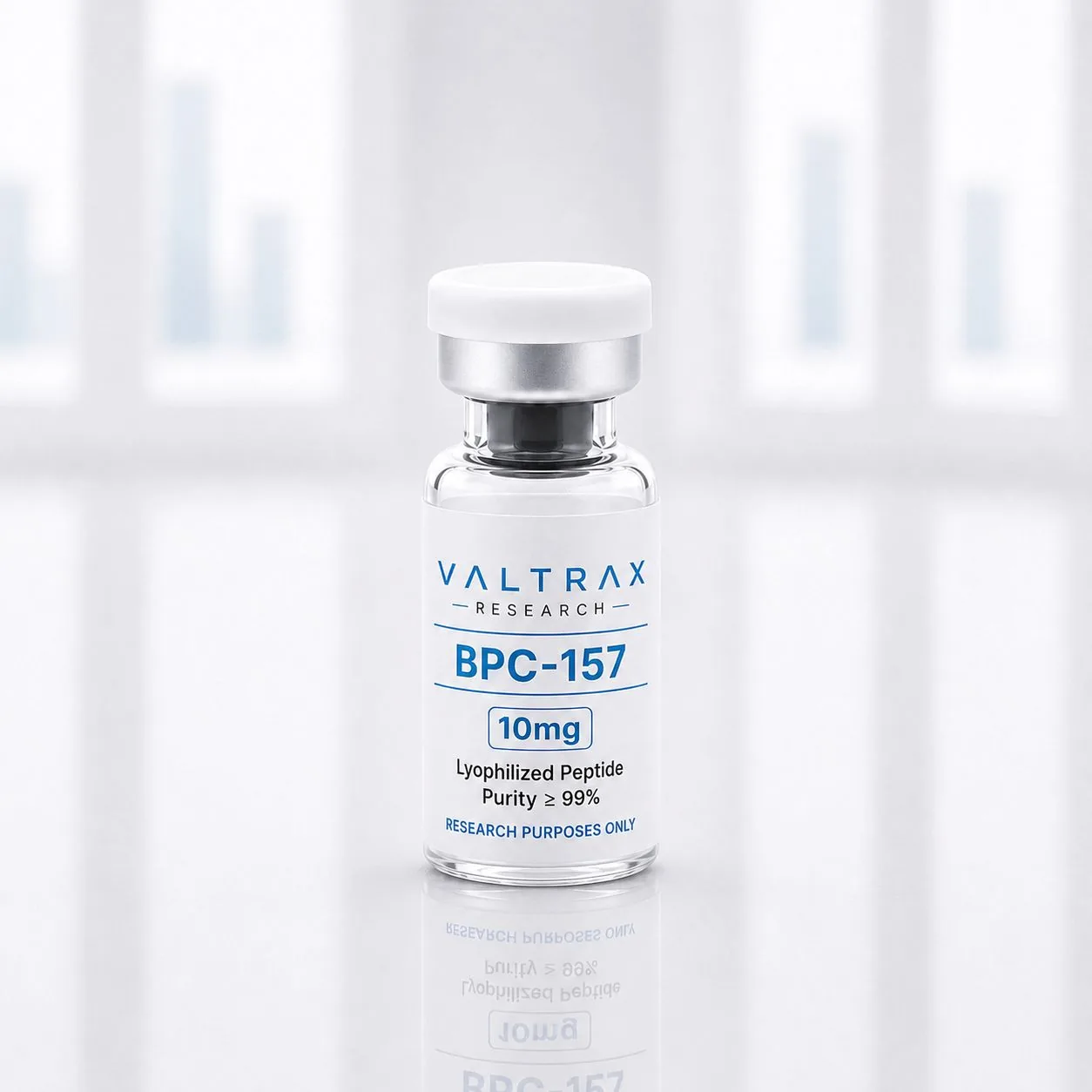
Body Protection Compound-157. A 15-amino-acid peptide studied in experimental models of structural repair and angiogenic pathway regulation.
Tissue Repair & Cytoprotection
$80.00
10mg
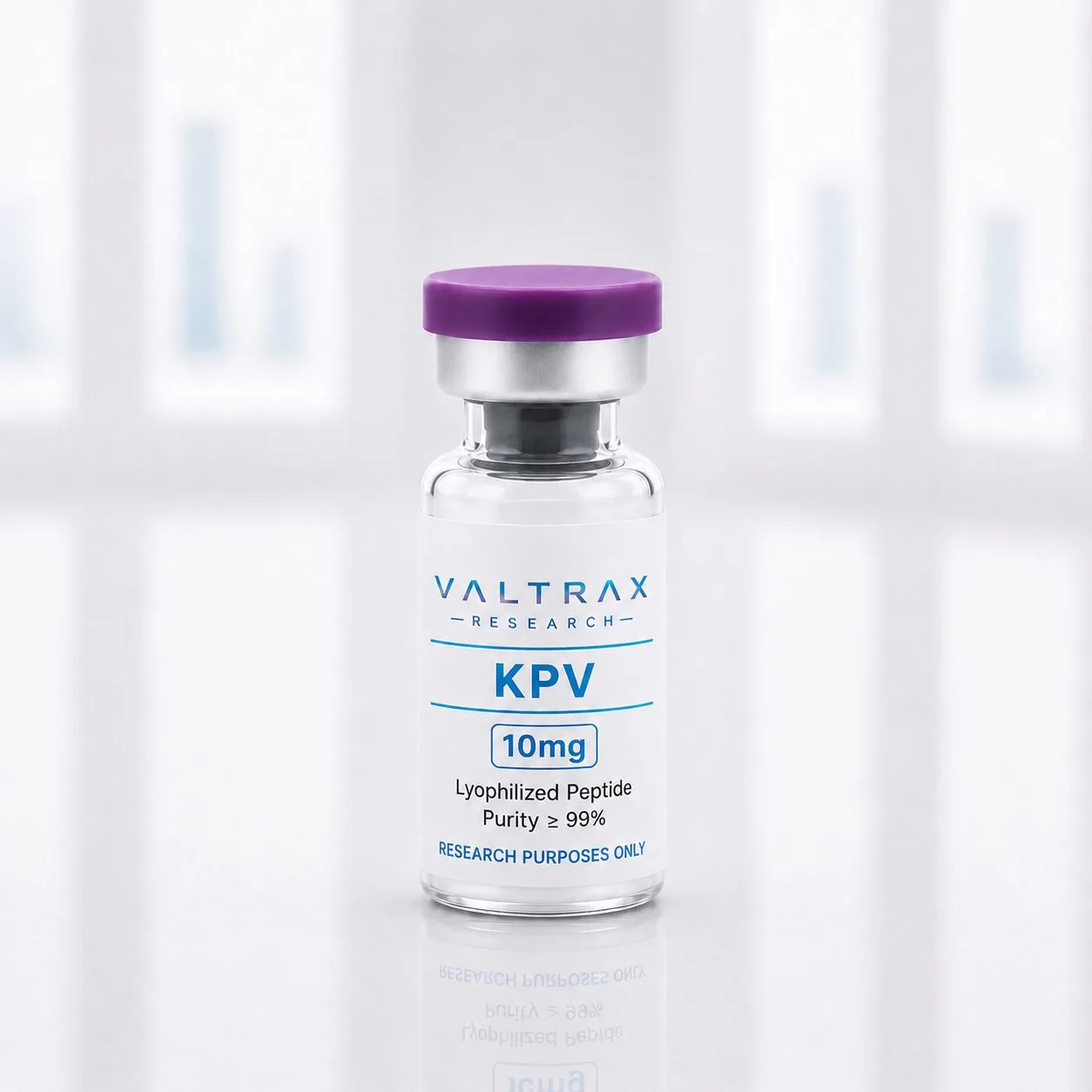
Lys-Pro-Val, the alpha-MSH(11–13) tail that keeps the anti-inflammatory signal without the pigmentation activity. Supplied as a lyophilized powder for research purposes only.